They Diagnosed Your Loneliness and Then Opened a Pill Shop: How Social Media Got Rich Selling You the Cure It Caused
Let's start with a number that should make your stomach do something unpleasant: the average American now spends roughly seven hours a day staring at screens. Seven hours. That's more time than most people sleep, more time than most people spend with their actual families, and — here's the kicker — a significant chunk of that time is spent watching other people appear to live the kind of warm, connected, laugh-filled life that you're not currently having because you're busy watching them have it.
This is not a coincidence. This is the business model.
Somewhere between the third TikTok about someone's impossibly aesthetic morning routine and the fourteenth Instagram story from a friend-of-a-friend's Cabo trip, something quietly terrible happened to the American social fabric. And the companies that profited from the unraveling had the audacity to keep sending you push notifications while it happened.
The Dealer Who Invented the Disease
Here's the con at the center of this whole racket: the platforms that sell you connection are the same ones manufacturing your disconnection. It's the pharmaceutical company that gives you the condition and then sells you the subscription treatment, except the treatment makes the condition worse, which increases your need for the treatment, which — well, you see where this goes.
The infinite scroll wasn't designed by accident. Former Netflix product VP Aza Raskin invented it, later called it one of his biggest regrets, and estimated it costs humanity roughly 200,000 hours of collective attention every single day. The notification badge — that little red circle of anxiety sitting on your app icon — was deliberately engineered to trigger the same dopamine response as a slot machine payout. The algorithmic feed that shows you content calibrated specifically to keep your eyeballs locked in place? That's not curation. That's a trap with better UX design.
None of this happened because engineers got sloppy. It happened because engagement is the currency and loneliness is the most reliable fuel for engagement ever discovered. A content person with a rich social life has places to be. A lonely person has nowhere to go but back to the feed.
The Metrics of Misery
Let's talk about what "engagement" actually means when you strip away the sanitized tech-speak. Every time you open Instagram because you're bored at dinner with your family, that's an engagement event. Every time you check Twitter — sorry, X, because Elon needed a rebrand to match his personality — at 2 a.m. because the silence in your apartment feels too loud, that's a data point. Every time you watch a stranger cry about their divorce on Facebook Live because it makes your own quiet sadness feel less alien, that's a conversion.
The platforms don't see loneliness. They see monthly active users, session duration, and return visit rates. Your 2 a.m. doom scroll is someone's quarterly earnings call highlight. Your social anxiety is someone's DAU growth metric. Your desperate need to feel seen is someone's Series D funding announcement.
And the most depraved part? They know. The internal research proving that these platforms corrode mental health, deepen isolation, and accelerate anxiety has been sitting in corporate servers for years. We know this because occasionally someone with a conscience walks out the door with the receipts — see: Frances Haugen, 2021, doing more damage to Meta's reputation in one Senate testimony than a thousand think pieces ever managed.
The Fake Cure Is Also a Subscription Service
So what does the loneliness economy offer as the antidote to the loneliness it created? More platform, naturally.
Facebook Groups, pitched as digital community centers where the disconnected could find their people. Instagram's Close Friends feature, a velvet rope for your parasocial relationships. Twitter Spaces and its various imitators, offering the warm illusion of conversation without the terrifying vulnerability of actual human contact. Discord servers. Subreddits. TikTok "communities" built around shared aesthetics and mutual parasocial devotion to creators who will never know your name.
These aren't solutions. They're methadone dispensed by the same dealer who got you hooked on heroin. They reduce the immediate pain just enough to keep you functional and, crucially, keep you on the platform. Real community — the messy, inconvenient, geographically-bound kind where people show up to help you move furniture — doesn't generate ad impressions. Digital community, carefully funneled through an algorithm that decides what you see and when, absolutely does.
The Scroll You Can't Stop Is the Point
There's a particular cruelty in the way the notification systems work that deserves its own paragraph of contempt. Your phone buzzes. Someone liked your photo. Someone commented. Someone reacted. Each of these micro-events is a tiny social reward — proof that you exist, that you matter, that someone out there registered your presence.
Except the platforms learned something early: variable reward schedules are more addictive than consistent ones. If every notification meant something substantial, you'd check once and put the phone down satisfied. But if the rewards are randomized — sometimes it's fifteen likes, sometimes it's two, sometimes it's a comment that genuinely moves you and sometimes it's spam — you keep pulling the lever. You keep checking. You stay in the casino.
This is not amateur-hour psychology. B.F. Skinner figured out variable reinforcement schedules using pigeons in the 1950s. Silicon Valley took his research, dressed it in a nicer font, and built a trillion-dollar industry around it. The pigeons, in this metaphor, are all of us.
What Gonzo Actually Knows
Here's the uncomfortable truth that no one in the tech industry will say out loud and no one scrolling at midnight wants to hear: the algorithm isn't keeping you company. It's keeping you compliant.
A genuinely connected person is a less profitable person. They call their friends instead of posting for them. They go outside instead of curating an outside for others to observe. They sit with discomfort instead of medicating it with content. They are, from a shareholder value perspective, basically useless.
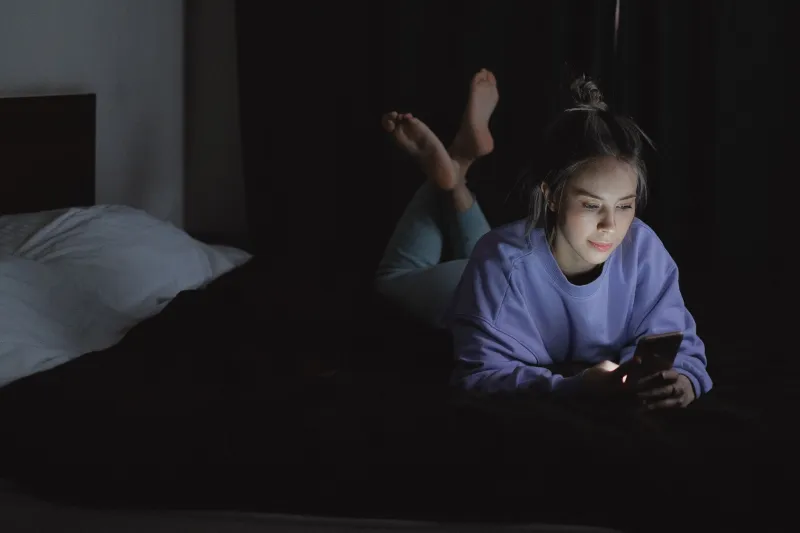
You, lonely and scrolling at 11:47 p.m. on a Tuesday, watching a stranger's dog do something cute while a targeted ad for a meal kit service loads between clips — you are the entire business. Your loneliness is the raw material. Your attention is the product. Your continued isolation is the growth strategy.
The platforms will not fix this. They will roll out new features that look like fixing it. They will issue statements about digital wellbeing. They will add screen time tools buried four menus deep that you will never use. And then they will hire smarter engineers to make the next version of the trap a little more comfortable.
You can be angry about this or you can keep scrolling. The algorithm, with its eerie and data-validated understanding of human psychology, is betting on the latter.
It's probably right. But at least now you know it's betting.