Sixty Seconds to Nowhere: How Short-Form Video Pickpocketed Your Brain and Called It Fun
Somewhere around 2021, a very specific kind of panic started circulating among filmmakers, novelists, educators, and basically anyone whose livelihood depended on holding a human being's attention for longer than the duration of a microwave burrito. The complaint was always framed the same way: nobody can focus anymore. Attention spans are collapsing. Gen Z can't sit still. The kids are ruined.
What those people missed — and what the platforms understood with terrifying precision — is that this wasn't a cultural accident. It was a product launch.
The Scroll That Never Ends and the Brain That Loves It
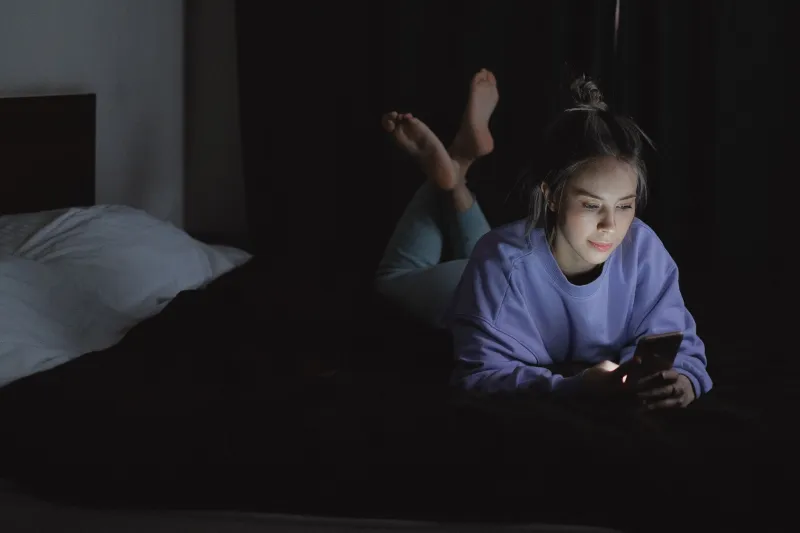
Here's what TikTok's engineers figured out that everyone else was too slow or too ethical to implement first: the human brain doesn't actually want to be bored for even half a second. Given the option between mild discomfort and instant novelty, it will choose novelty every single time. This isn't a character flaw. It's evolutionary hardware that kept your ancestors alive on the savanna and now keeps you on your couch at 1 a.m. watching a man in Ohio explain why certain pasta shapes are objectively superior.
The infinite scroll format, combined with videos calibrated to hook you in the first one to two seconds, created something neuroscientists describe as a dopamine feedback loop so efficient it makes slot machines look like amateur hour. Every swipe is a tiny gamble. The next video might be terrible. It might be the funniest thing you've seen this week. Your brain cannot resist finding out. And TikTok's algorithm — which is genuinely, disturbingly good at its job — learns your specific neurological weaknesses faster than most people learn your name.
It Wasn't Just TikTok. It Was the Whole Industry Copying TikTok.
Let's give credit where it's due: TikTok didn't invent short-form video. Vine was doing six-second loops back when Barack Obama was still in the White House. But TikTok industrialized the concept, weaponized the algorithm, and then watched the rest of Silicon Valley scramble to catch up like students copying the smart kid's homework.
Instagram killed its chronological feed and launched Reels. YouTube introduced Shorts and buried long-form content in the recommendation rankings. Snapchat leaned harder into its story format. Even LinkedIn — LinkedIn — started pushing short video content, which is perhaps the most depressing sentence written in this publication's history.
The result is that the sixty-second content format didn't just dominate one platform. It became the gravitational center around which every other content format now orbits. Podcasters started making "clips." Journalists started making TikToks. Late-night hosts started optimizing for the twelve-second shareable moment rather than the four-minute monologue. The entire content economy restructured itself around an attention span it helped destroy.
What We Traded and What We Got Back
Now here's where Gonzo Knows has to get honest in a way that might sting a little, because the short-form content conversation almost always turns into generational blame-casting, and that's both lazy and wrong.
What we collectively lost in this trade is real. Long-form storytelling — the kind that requires you to sit with ambiguity for ninety minutes before the payoff arrives — is genuinely struggling. Theatrical attendance for non-franchise films has cratered. Literary fiction readership among adults under forty has declined measurably. The market for documentaries that don't resolve in forty minutes is shrinking. Investigative journalism that requires sustained reader attention is fighting for its life.
These aren't trivial losses. The ability to hold complexity in your head long enough to understand it — to follow an argument through its full arc, to sit with a character's contradictions, to let a piece of music develop before it resolves — is not just an entertainment preference. It's a cognitive muscle. And like any muscle you stop using, it weakens.
But here's what the pearl-clutching crowd always leaves out: short-form content also democratized creative expression in ways that were genuinely revolutionary. A twenty-two-year-old with a phone and something interesting to say now has the same distribution infrastructure that used to cost millions of dollars and require a network executive's approval. The gatekeepers got kicked in the teeth, and some genuinely brilliant, weird, underrepresented voices walked through the door. That's not nothing.
Your Attention Is a Commodity and Someone Is Getting Rich Off It
The thing nobody in the short-form content celebration wants to say out loud is this: your fractured attention isn't just a byproduct of the platform economy. It is the product.
Advertisers don't buy content. They buy eyeballs and the seconds those eyeballs remain open. TikTok's entire business model is predicated on maximizing the number of seconds you spend in the app across as many sessions per day as possible. Every feature — the autoplay, the algorithm, the sound-on default, the seamless loop — is engineered toward one outcome: keeping you inside the app longer than you planned to be.
The sixty-second video format isn't a creative constraint. It's a delivery mechanism for advertising inventory. And the fragmented, dopamine-optimized attention pattern it produces in regular users makes you more susceptible to impulse purchasing, not less. The platforms know this. The advertisers know this. You're the last one in the room to find out.
Can You Actually Get It Back?
The attention span isn't gone. It's just been redirected. People who claim they can't sit through a three-hour film will happily binge eight episodes of a prestige drama in a single sitting — because the streaming format is engineered to keep them moving forward just as deliberately as TikTok is.
The capacity for sustained focus hasn't been deleted. It's been rented out, and the rent is your time, your data, and your increasingly pliable consumer behavior.
Reclaiming it isn't complicated, but it does require doing something the entire platform economy is designed to prevent: being bored on purpose. Sitting with a book that doesn't hook you immediately. Watching a film that takes twenty minutes to establish its world. Listening to an album from beginning to end without shuffling. Letting a thought develop past its first sentence.
None of that generates revenue for anyone. Which is exactly why it might be the most rebellious thing you do all week.