Your Grandpa Didn't Radicalize Himself — Cable News Did It For Him, and It Was Always the Plan
Your Grandpa Didn't Radicalize Himself — Cable News Did It For Him, and It Was Always the Plan
There's a version of your grandfather that existed before cable news got its hooks in him. He was probably pretty normal. Watched football. Complained about the weather. Had opinions about lawn care. Maybe he was a little grumpy — sure — but he was generically grumpy, the kind of grumpy that's basically harmless and occasionally charming.
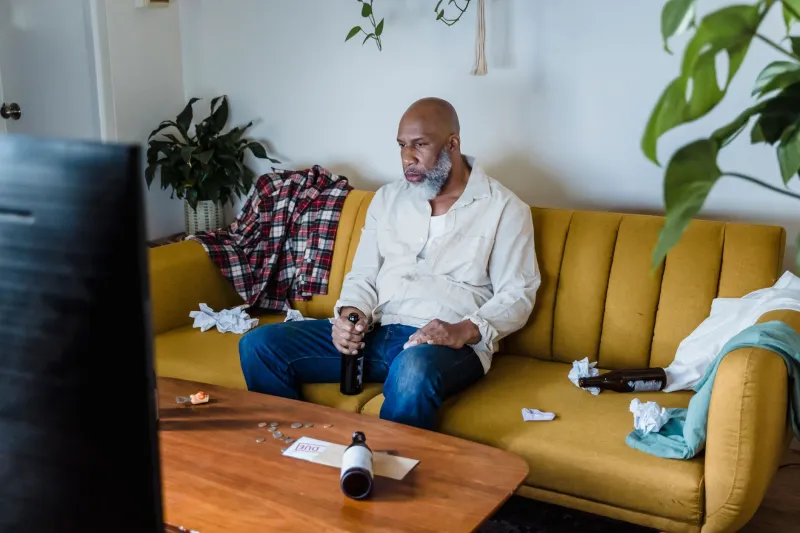
Then somewhere around his retirement, he discovered that a television channel would stay on, twenty-four hours a day, and tell him — in urgent, breathless tones — that everything was on fire, that the people responsible were obvious and identifiable, and that only a fool would look away.
Now he eats dinner with one eye on the screen. He forwards emails. He has opinions about cable news personalities the way he used to have opinions about relief pitchers. He is, in the clinical sense, gone.
This is not a coincidence. This is a business model.
The Architecture of Manufactured Fury
Let's talk about how the machine actually works, because it is genuinely impressive engineering — just not in a way that should make anyone feel good.
The 24-hour news cycle was born in 1980 when CNN launched and immediately had to solve a problem that no one in television had ever really faced before: too much airtime and not enough news to fill it. Real, substantive news — the kind that requires reporting, verification, and context — doesn't generate itself fast enough to fill 24 hours of programming seven days a week. Something had to fill the gaps.
The answer, it turned out, was emotion. Specifically, anger and fear, which are the two most effective attention-retention tools in the human psychological toolkit. Neuroscience has known for decades that the brain prioritizes threatening information. We are wired, at a very basic level, to pay more attention to danger than to safety. Cable news didn't discover this — it just decided to exploit it commercially and at scale.
The format evolved accordingly. News became less about informing and more about activating. Panels of people disagreeing loudly. Countdown clocks. Chyrons written in the grammar of emergency. Breaking news alerts for things that are, technically, not breaking and often barely news. Every segment engineered to leave you slightly more agitated than when it started, which makes you slightly less likely to change the channel.
This is not journalism. It is, in the most literal sense, a psychological retention strategy.
The Personalities Who Became the Product
At some point — and this is worth sitting with — the news stopped being the product and the hosts became the product. Tucker Carlson, Rachel Maddow, Sean Hannity, Don Lemon: these people aren't journalists in any traditional sense of the word. They're performers. Characters. They exist to be the avatar of a particular kind of outrage that a particular audience wants to feel.
And the audiences are loyal in the way that cult members are loyal — not to information, but to the feeling. The feeling of being right. The feeling of being under threat. The feeling of belonging to the side that sees what's really going on while everyone else sleepwalks through the manufactured reality.
The networks figured out that if you can make a viewer feel like the host is the only person telling them the truth, you've essentially created a subscriber for life. You don't need to be accurate. You need to be validating. There's a meaningful difference, and cable news made a fortune exploiting it.
What 'Staying Informed' Actually Became
Here's the question that doesn't get asked enough: at what point does consuming news become something other than being informed?
Because there is a version of media consumption that resembles staying informed, and there is a version that looks an awful lot like a compulsion. The person who checks the news every 20 minutes. Who can't get through a meal without referencing something they saw on cable. Who has fully incorporated a cable news personality's worldview into their own identity. Who experiences genuine physical agitation when they're away from the feed for too long.
That's not a citizen. That's a user. And the networks are the dealers.
The average Fox News viewer is in their late 60s. The average MSNBC viewer isn't far behind. These are retired people with time, anxiety, and a television — which is to say, the perfect demographic for a product designed to fill empty hours with emotional stimulation. It's not a coincidence that outrage media found its most devoted audience among people who had recently lost the structure of a working life. Cable news stepped into that void and handed them a purpose: be angry, stay vigilant, the stakes are always maximum.
The Family Dinner Industrial Complex
The collateral damage of all this is sitting across from you at Thanksgiving.
The radicalization of the American family dinner table is one of the quieter cultural catastrophes of the last 25 years. Families that used to argue about sports or whose turn it was to do the dishes now argue about things they saw on cable news — things that have been specifically designed to generate maximum emotional response, stripped of nuance, packaged for conflict.
And the networks profit from every single one of those arguments. Every time Uncle Dave brings up something he saw on Fox, every time your cousin fires back with something from MSNBC, every time someone leaves the table early — that's the product working as intended. The outrage doesn't stay on the screen. It migrates into relationships, into families, into the texture of daily life. And people go back to the screen to process the feelings that the screen generated in the first place.
It's a closed loop. It's elegant, in a deeply cynical way.
So What Do We Actually Do About It?
Gonzo Knows isn't going to hand you a listicle of media literacy tips and call it a day. You've seen those. They don't work on the people who need them most, because the people who need them most have already been convinced that media literacy is itself a conspiracy.
What we will say is this: the first step is just recognizing that the outrage you feel after watching cable news is not an organic response to the world as it is. It is a manufactured response to a product designed to manufacture it. You are not more informed after three hours of prime-time cable. You are more activated, more tribal, more convinced that the other side is uniquely monstrous — and you are less capable of the kind of boring, patient, ambiguous thinking that actual civic life requires.
The machine runs on your attention. It was built to run on your attention. It has been extraordinarily successful at capturing your attention, and it has made a lot of people very wealthy in the process.
Your grandfather didn't lose his mind. Someone took it, slowly, one segment at a time, and sold it back to him as wisdom.
That's the story. That's always been the story. And it's still on, right now, if you want to turn it on.