America's Most Lovably Delusional Tribe: A Field Guide to the Sports Fan
America's Most Lovably Delusional Tribe: A Field Guide to the Sports Fan
Let's establish something immediately: this is not a hit piece. What follows is not a clinical takedown, a snobbish cultural critique, or an attempt to make anyone feel bad about the very reasonable decision to spend $400 on a jersey for a man who doesn't know you exist. This is a celebration. A deeply affectionate, occasionally baffled, genuinely awed celebration of the most spectacularly irrational fan culture the world has ever produced.
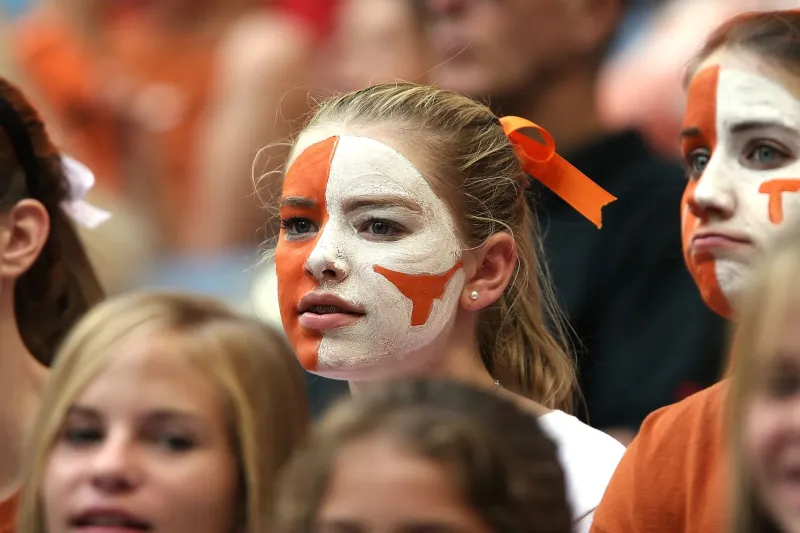
Because here's the thing — Gonzo Knows has looked around the globe, surveyed the soccer ultras of Europe, the cricket devotees of South Asia, the rugby faithful of New Zealand — and none of them, none of them, have cracked the specific frequency of unhinged loyalty that the American sports fan operates on. It's not just fandom over here. It's a religion, a personality disorder, and a primary source of identity all fused into one paint-covered, foam-finger-waving, emotionally volatile package.
We mean that as the highest possible compliment.
The Delusion Is the Point
Let's start with the foundational psychological quirk that makes American sports fandom so uniquely spectacular: the complete and total erasure of the line between the team and the self.
A British soccer fan will say "Liverpool won." An American football fan will say "We won."
This is not a small distinction. This is a worldview. The American fan has, through some magnificent act of collective self-deception, decided that their emotional investment, their Sunday rituals, their lucky socks worn three weeks running, their refusal to change the channel during a bad drive — that all of this matters. That they are, in some cosmically meaningful way, part of the team.
Sports psychologists have a term for this: BIRG-ing. Basking in Reflected Glory. The science says humans naturally affiliate with winning groups to boost self-esteem. The American sports fan didn't just BIRG — they built an entire civilization around it. Season tickets passed down through wills. Fan caves that cost more to furnish than some people's actual living rooms. Prenuptial agreements that specify what happens to the Cowboys season tickets in a divorce. (This is a real thing that has happened in Texas courts. Gonzo salutes you, anonymous Texan.)
The December Freezers: A Special Breed
Every December, as rational human beings migrate toward heated indoor spaces and warm beverages, a very specific subset of American sports fan does the opposite. They travel toward the cold. They remove their shirts. They paint numbers on their chests. They sit in stadiums where the wind chill makes the actual temperature feel like the surface of a distant moon, and they scream for three hours.
Green Bay Packers fans at Lambeau Field. Buffalo Bills fans in January. Cleveland Browns fans in... well, any month, honestly, which is its own form of heroism.
The rest of the world looks at this behavior and sees hypothermia risk. Americans look at it and see devotion. And you know what? The rest of the world is wrong. There is something genuinely moving about a human being who cares so much about something that they are willing to sacrifice basic physical comfort for it. We've built entire philosophical traditions around that kind of commitment. We just usually apply them to things like religion or art, not a third-and-long conversion attempt in a divisional playoff game.
But who's to say that's not sacred? Gonzo isn't. Gonzo is not touching that one.
Fantasy Football: Where Delusion Becomes Infrastructure
If you want to understand the American sports fan's capacity for emotional investment, you don't need to go to a stadium. You need to sit in on a fantasy football draft.
Fantasy football is, objectively, a spreadsheet hobby with a gambling problem. It involves tracking the statistical performance of real athletes to determine outcomes in a game that exists entirely in a shared fiction. Millions of Americans play it. They spend real money on it. They research it with an intensity that, if redirected toward literally any other pursuit, would result in multiple advanced degrees.
And when it goes badly — when your running back blows out a hamstring in the first quarter, when your quarterback throws three picks, when you lose your league championship by 0.4 points because a kicker missed an extra point — people grieve. Real grief. The kind with stages. The kind that affects mood for days.
This is not a character flaw. This is a feature. The American sports fan has somehow engineered a system where the stakes feel real even when they're entirely constructed. That's not delusion — that's storytelling. That's the same impulse that makes people cry at movies they know are fiction. The emotional response is genuine even when the framework is invented.
Fantasy football is just participatory narrative. With more arguments about wide receiver depth charts.
The Loyalty Paradox
Here's where it gets philosophically interesting: American sports fans maintain fierce loyalty to franchises that are, from a strict business perspective, not loyal back.
Teams relocate. The Baltimore Colts loaded their equipment into moving trucks in the middle of the night and woke up in Indianapolis. The Seattle SuperSonics became the Oklahoma City Thunder. The Oakland Raiders have moved so many times they should have a frequent flyer account. And yet — fans remain. Not just for the new team, but carrying the grief of the old one like a phantom limb.
The Cleveland Browns have a section of their stadium called the Dawg Pound where fans have spent decades cheering a franchise that has given them approximately four seasons worth of genuine hope spread across thirty years. The loyalty is completely disproportionate to the return on investment. It is, by any rational measure, absurd.
It is also, by any human measure, kind of beautiful. Because the thing the American sports fan is actually loyal to isn't the players (who get traded), or the owners (who are mostly just rich guys with a stadium-shaped hobby), or even the city (since teams leave those too). They're loyal to the idea. The shared mythology. The memory of where they were when. The person their dad was when he took them to their first game.
That's not delusion. That's meaning-making. That's what humans do.
Why It Hits Different Here
Other countries have passionate fans. Nobody is suggesting otherwise. But American sports fandom has a few ingredients that make it a uniquely potent brew.
First: the geographic tribalism. American sports teams represent cities in a way that feels almost civic. You're not just a fan — you're a Chicagoan, a Bostonian, a Philadelphian. The team's performance reflects on the city's honor. This is why Philadelphia fans have such a complicated reputation. They're not mean. They're just deeply, catastrophically invested in the city's dignity.
Second: the scarcity model. Unlike European soccer leagues with promotion and relegation and dozens of professional clubs, American sports markets are tightly controlled. There's one NFL team per city (mostly). That exclusivity concentrates the emotional investment in a way that makes it almost pressurized.
Third, and most importantly: Americans simply do not do things halfway. This is a national characteristic that applies equally to portion sizes, theme park construction, and emotional investment in sporting events. When an American decides something matters, it matters. Volume turned up to eleven. All the way, every time.
The Verdict
Is the American sports fan delusional? By strict dictionary definition, perhaps. The belief that wearing a specific shirt affects game outcomes, that a stadium full of noise can physically alter a quarterback's decision-making, that this is the year — these are not evidence-based positions.
But Gonzo Knows this much: a world with less of this specific brand of beautiful, face-painted, jersey-wearing, fantasy-roster-agonizing delusion would be a colder and considerably less entertaining place.
So here's to the guy who hasn't washed his lucky hat since the 2011 playoffs. Here's to the woman who drove fourteen hours to watch her team lose in the rain. Here's to every person who has ever explained to a confused foreigner why this Sunday's game is, in fact, the most important thing happening on the planet right now.
You are all completely out of your minds.
Gonzo wouldn't have it any other way.