Step Right Up: TikTok's Creator Economy Is Just a Carnival With Better Wi-Fi
In the summer of 1887, a man named Colonel T. Barker set up a tent in rural Ohio and charged fifteen cents to see what he described as "the world's most confounding human mystery." Inside the tent was a man who could wiggle his ears with alarming enthusiasm. People paid. They came back the next night. They told their neighbors.
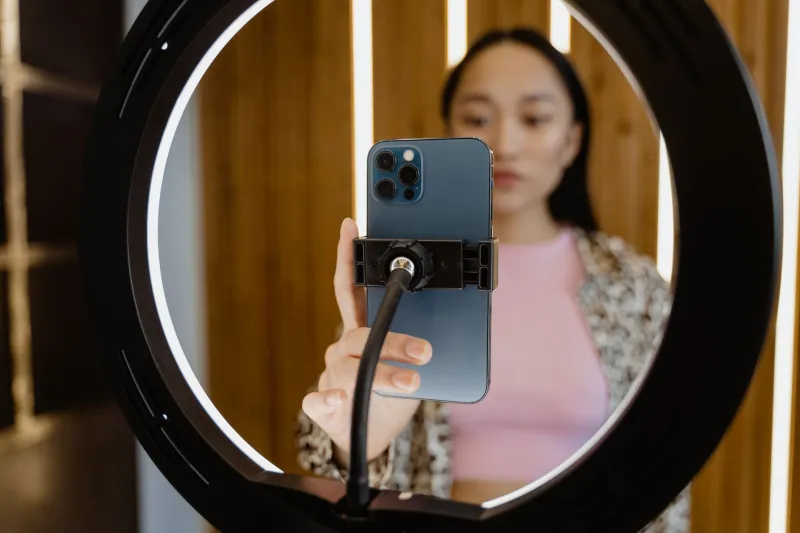
In 2024, a twenty-three-year-old in Phoenix posts a video of himself reacting to other people's videos and accumulates 4.2 million followers. Brands pay him to hold products. He buys a Dodge Challenger. His audience watches the whole thing happen and keeps watching.
Somebody explain to me what's different, because I genuinely cannot find it.
The Midway Never Closed, It Just Got a Algorithm
The traveling carnival was one of America's great social institutions for about a century — a rolling ecosystem of performers, con artists, genuine talent, and manufactured wonder that fed on the oldest human hunger: the desire to see something you've never seen before, even if you suspect it isn't quite what it's advertised to be.
Carnival barkers were the architects of that experience. Their entire job was to stand at the entrance of something and convince you that whatever was inside was worth your time and your dime. They were loud. They were relentless. They created urgency out of thin air. They made you feel like leaving would mean missing something essential about the human experience.
Now open TikTok and watch the first three creators who appear in your For You Page. Count how many seconds pass before someone says "wait for it" or "you won't believe this" or starts a video mid-sentence as if you've already been there for twenty minutes. That's a barker. That's the tent entrance. That's fifteen cents, adjusted for inflation and denominated in your attention.
The platform is a carnival, the algorithm is the lot manager who decides which acts get the premium spots, and the creators are the performers — some genuinely talented, most desperately hustling, all of them aware that the crowd can vanish as quickly as it arrived.
The Desperation Is Load-Bearing
Here's the thing about carnival performers that contemporary creator discourse tends to sanitize: a significant portion of what made them compelling was the visible desperation. The fire-eater who held the flame a beat too long. The strongman who strained a little too hard. The sense that something real was at stake, that the performer wasn't entirely comfortable, that you were watching someone push against an actual limit.
TikTok recreated this with uncomfortable precision, except the desperation is emotional rather than physical. The creators who go viral are frequently the ones who are visibly, genuinely struggling with something — a breakup, a financial crisis, a family conflict, an identity question — while the camera rolls. The audience can smell authentic distress the way a dog smells fear, and the platform rewards it with reach.
This creates a grotesque incentive structure where creators learn, consciously or not, that performing vulnerability generates more engagement than performing competence. So they perform vulnerability. Sometimes it's real. Sometimes it's manufactured. Often it's real feelings being packaged and delivered on a schedule, which is its own particular kind of psychological violence that nobody in the creator economy seems particularly eager to discuss.
The carnival performer knew they were in a show. The TikTok creator is in a show that has convinced itself it isn't one.
What You're Actually Paying With
The argument you'll hear from creators and platform apologists is that it's all free. Nobody's forcing you to watch. No ticket booth. No fifteen cents. Just scroll if you don't like it.
This is the most successful lie the attention economy ever told, and it's been told so many times it's started to feel like common sense.
Your attention is a finite resource. Every neuroscientist, behavioral economist, and casino designer on the planet understands this and has built entire industries around extracting it efficiently. When you spend forty-five minutes watching TikTok, you have spent forty-five minutes. That's not a metaphor. That time does not come back. The coin you threw into the carnival barker's hat was real money; the coin you're throwing into the creator economy is real time, and time is the one thing you genuinely cannot earn more of.
Beyond time, you're paying with data, with emotional bandwidth, and with the slow recalibration of your expectations about what human connection looks like. The parasocial relationship you build with a creator — the one where you feel like you know them, root for them, feel genuinely bad when something goes wrong in their life — is a relationship that asks everything of you and can offer nothing back when you actually need something. It's a carnival mirror that shows you a friendship.
The Crowd Knows, and Comes Anyway
What's genuinely fascinating about all of this — and what separates the TikTok economy from simple exploitation — is that the audience isn't stupid. Most people, if pressed, will admit they know the drama is probably amplified. They know the "authentic" moments are sometimes staged. They know the creator they feel close to doesn't know they exist.
And they watch anyway. The same way people watched the carnival, knowing the "bearded lady" was a guy in a dress and the "world's smallest horse" was just a pony. The knowing doesn't kill the spectacle. Sometimes it enhances it.
There's something almost touching about this, if you're in a generous mood. Humans are so hungry for novelty, for connection, for the feeling of being part of something happening right now, that they'll take a simulation of it and treat it like the real thing. The carnival understood this. TikTok has automated it.
The Show Must Go On, Whether You Like It or Not
The carnival eventually declined — not because people stopped wanting spectacle, but because spectacle got cheaper and more accessible. Movies. Television. The internet. Each new medium promised a more efficient delivery system for the same ancient hunger.
TikTok is not the end of this story. Whatever comes after it will be more immersive, more personalized, more precisely calibrated to keep you inside the tent for exactly as long as the algorithm determines is optimal. The barker will get better. The acts will get wilder. The coins you throw will be harder to see leaving your hand.
Colonel T. Barker would have absolutely thrived in this environment. He would have had a verified account, a merch line, and a podcast about the creator journey.
And honestly? You would have followed him.