You Thought You Were Free. You Were Just in a Fancier Cage.
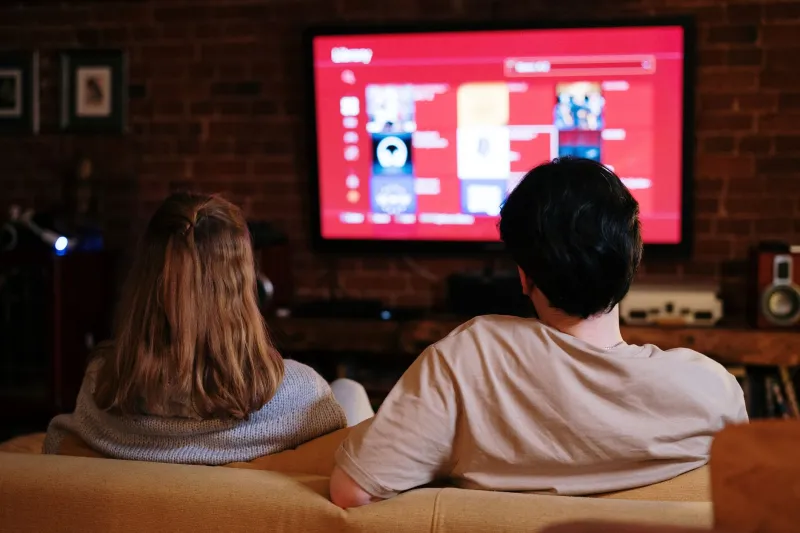
Remember the pitch? Watch what you want. When you want. How you want. It was practically a Declaration of Independence for the couch potato demographic. No more waiting until Thursday at 9pm. No more missing an episode because you had the audacity to have a life. Streaming was going to hand you the remote — the real remote — and finally let you watch television on your own terms.
Look at you now. It's 2:47am on a Tuesday. You have work in four hours. You're watching the seventh consecutive episode of a show you described as "just okay" three episodes ago, and you cannot physically stop.
Freedom is wild, isn't it?
The Liberation Was Always a Sales Pitch
Here's the thing nobody wanted to say out loud when Netflix started mailing DVDs in red envelopes and then quietly pivoted to owning your entire waking life: the streaming revolution was never about your autonomy. It was about engagement metrics, quarterly subscriber numbers, and figuring out how to make you forget that sleep is a biological requirement.
Broadcast television had a structural limitation that drove advertisers absolutely insane — the schedule. You could only keep a viewer locked in for so long before real life intervened. The show ended. You went to bed. You came back next week. That gap was the enemy.
Streaming didn't just eliminate the gap. It declared war on it.
Autoplay was the first weapon deployed. That little countdown timer — ten seconds before the next episode starts — is not a convenience feature. It's a behavioral trap built on something psychologists call "default bias," which is a fancy way of saying humans are spectacularly lazy about changing the path of least resistance. Netflix didn't invent this. Casinos have known it for decades. You don't get up from the slot machine between pulls either.
Cliffhangers Got a Science Degree
The cliffhanger is as old as serialized storytelling. Charles Dickens was doing it in the 1800s. But what streaming platforms did was professionalize it into something almost sinister in its precision.
When Netflix started producing its own content, it wasn't just hiring writers — it was sitting on a mountain of behavioral data telling it exactly when viewers paused, rewound, quit, or kept watching. They knew which plot devices made people stay. They knew which emotional beats produced the "just one more" response. And then they handed those notes to showrunners and said, essentially, build the machine.
The result is a specific and deeply familiar feeling: an episode that doesn't end so much as stop, right at the moment your nervous system is least equipped to handle unresolved tension. It's not storytelling. It's a psychological hostage situation with better cinematography.
And before you say "I can stop whenever I want" — statistically, you cannot. Studies on binge-watching behavior consistently show that viewers dramatically underestimate how many episodes they'll watch in a single sitting. You sat down for one. You watched four. The platform knew you'd watch four. It built the experience around you watching four.
The Algorithm Is Not Your Friend. It Is Your Dealer.
Then there's the queue — that seemingly innocent list of things the platform "thinks you'll enjoy." The recommendation algorithm is one of the most sophisticated pieces of psychological engineering ever deployed against the general public, and it lives inside something you think of as entertainment.
It is not recommending content because it wants you to be happy. It is recommending content because it wants to maximize the number of minutes you spend on the platform. Those are related goals, but they are not the same goal, and the gap between them is where your sleep schedule went to die.
The algorithm is optimized for engagement, not satisfaction. It will absolutely serve you content that leaves you vaguely unsettled, mildly outraged, or emotionally unresolved — because those states keep you watching. Contentment, it turns out, makes people turn the TV off. Closure makes people go to bed. The algorithm has learned to avoid both.
This is not a conspiracy theory. It's an openly documented business strategy. Former Netflix product executives have talked about it. Researchers have studied it. The platforms themselves have filed patents describing the mechanics of it. The information is right there. You just didn't have time to read it because you were watching another episode.
Network TV Called. It Wants Its Dignity Back.
Here's the darkest irony in all of this: the broadcast network model that streaming supposedly destroyed was, in many ways, less manipulative.
Yes, you had to watch commercials. Yes, you were locked into a schedule. But the schedule also meant the show ended. At 10pm, the network said goodnight. The natural stopping point was built into the structure. You didn't have to exercise willpower — the format exercised it for you.
Streaming removed that guardrail and replaced it with a system specifically engineered to prevent you from ever finding a natural stopping point. Then it marketed the removal of the guardrail as freedom.
That's a move so audacious it almost deserves respect.
So What Do You Do With This Information?
Gonzo's not here to tell you to cancel your subscriptions and go read Tolstoy. That's not a realistic outcome, and honestly, some of this content genuinely slaps. The issue isn't that streaming exists. The issue is watching it with your eyes open about what it actually is.
When the autoplay timer counts down, it's not asking if you want to continue. It's betting — correctly, most of the time — that you won't bother to say no. When the episode ends on a gut-punch revelation, that's not an accident of storytelling. That's a feature. When the algorithm serves you something you didn't ask for but somehow can't stop watching, you're not discovering new interests. You're being managed.
The TV schedule didn't disappear. It just got personalized, weaponized, and wrapped in a user interface that makes it feel like your idea.
You're not watching what you want, when you want. You're watching what they built to be unwatchable-stopping, at the exact moment they calculated you'd be too tired and too hooked to fight back.
The cage is real. The bars are just made of autoplay and unresolved plot threads now.
Sleep tight.